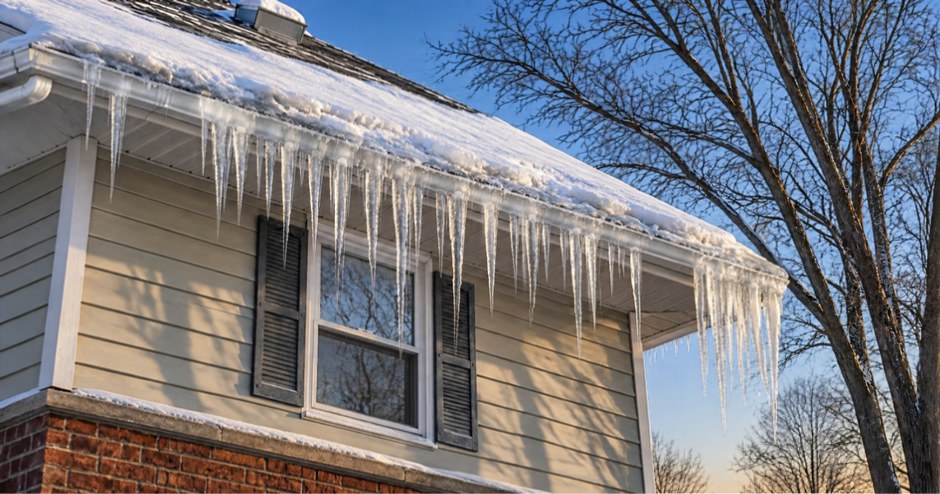
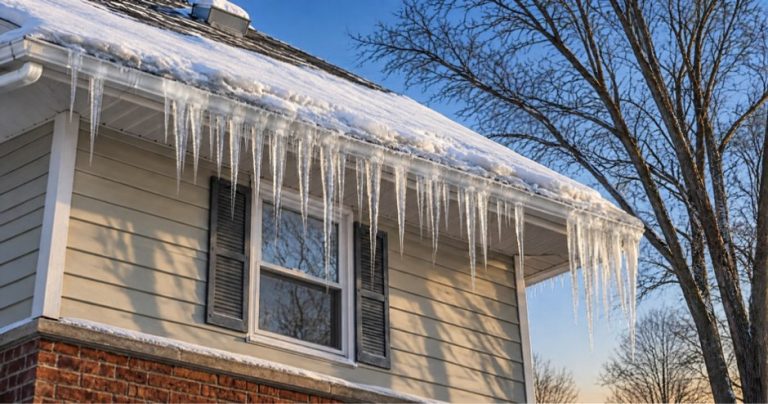
How to Prevent Ice Dams on Your Indiana Roof This Winter
 Michael Myers
- Attic Insulation
- November 17, 2026
The best way to prevent ice dams is to keep your roof deck cold. That means sealing air leaks into the attic, adding enough insulation, and making sure the attic is properly ventilated, so heat from your living space never melts the snow on your roof. Clean gutters and a healthy roof help too. This guide explains what causes ice dams, the warning signs to watch for, and the steps that stop them before they lead to leaks this winter in Central Indiana.
What Is an Ice Dam?
An ice dam is a ridge of ice that forms along the edge of your roof and blocks melting snow from draining off. Water backs up behind the ice, works its way under the shingles, and can leak into your attic, walls, and ceilings.
Ice dams form in three steps:
- Heat escapes into the attic: Warm air from your home leaks up through gaps in the ceiling and thin insulation.
- Snow melts on the upper roof: The warm roof deck melts the bottom layer of snow, and the water runs down toward the eaves.
- Water refreezes at the edge: The roof overhang above the eaves stays cold, so the meltwater freezes there and builds a dam that gets bigger with every melt.
Why Central Indiana Homes Get Ice Dams
Indiana winters are made for ice dams. Snow is often followed by a few sunny afternoons and then hard freezes at night. Each cycle melts a little more snow and adds another layer of ice at the eaves.
Many homes across Hamilton, Hancock, Tipton, Boone, Marion and Hendricks counties also have attic insulation that has settled or was never brought up to today’s recommendations. ENERGY STAR recommends R-49 to R-60 for an uninsulated attic in our climate. When insulation falls short, heat reaches the roof deck, and that is exactly what feeds an ice dam.
Warning Signs You Have an Ice Dam Problem
- Icicles hanging thick along the gutters and eaves
- A thick ridge of ice along the roof edge while the rest of the roof is clear
- Water stains or peeling paint on ceilings near exterior walls
- Damp or frosty spots on the underside of the roof deck in your attic
- Gutters pulling away from the house under the weight of ice
- Snow melting off your roof much faster than your neighbors’ roofs
That last one is a telltale sign. If your roof is bare while the houses around you are still white, heat is escaping through your attic.
How to Prevent Ice Dams: 5 Steps That Work
1. Seal attic air leaks
Gaps around light fixtures, plumbing stacks, chimneys, and the attic hatch let warm, moist air pour into the attic. Sealing them is the first and most important fix.
2. Bring attic insulation up to the recommended level
Proper attic insulation keeps heat in your living space and out of the attic. It also lowers heating bills and evens out cold rooms upstairs. Our guide to the right attic insulation for Indiana’s varied climate explains how much you need.
3. Make sure the attic is ventilated
Soffit and ridge vents let cold outside air move under the roof deck, which keeps it the same temperature as the outdoors. Blocked soffit vents are a common cause of ice dams.
4. Keep gutters and downspouts clear
Clogged gutters hold water and ice right where dams form. Clean them before winter, and consider gutter guards to keep leaves and debris out. For more, see our tips on protecting your gutters in cold climates.
5. Fix roof problems before the snow flies
Worn shingles and damaged flashing give backed-up water an easy way in. A roof repair now is much simpler than a leak in January.
What Not to Do If You Already Have an Ice Dam
- Don’t chip at the ice with a hammer or ice pick. It’s easy to damage shingles and gutters.
- Don’t climb onto an icy roof or ladder.
- Don’t use rock salt on the roof. It can damage shingles, gutters, and plants below.
- Don’t ignore a ceiling stain. Water may be soaking insulation and framing before you see a drip.
If you see an active leak, call a professional. Once winter is over, fix the attic so the problem doesn’t return next year.
What We See in Central Indiana Homes
Myers Exteriors is based in Carmel and works on homes across Central Indiana, including Fishers and Westfield. When homeowners call us about ice dams, the roof usually isn’t the root cause. The real problem is heat getting into the attic through gaps and thin insulation. Fixing the attic is what keeps ice dams from coming back.
Ice Dam Prevention Checklist
- Seal air leaks around lights, pipes, chimneys, and the attic hatch
- Check attic insulation depth and add more if it’s thin or settled
- Make sure soffit vents aren’t blocked by insulation
- Clean gutters and downspouts before the first snow
- Repair worn shingles and damaged flashing
- Watch for heavy icicles and ceiling stains after each snow
Frequently Asked Questions
What causes ice dams on a roof?
Heat escaping from your home warms the roof deck and melts the snow. The water refreezes at the cold roof edge and forms a dam that traps more water behind it.
Do gutters cause ice dams?
Gutters don’t cause ice dams, but clogged gutters make them worse by holding water and ice at the roof edge. The root cause is heat loss into the attic.
Will more attic insulation stop ice dams?
Insulation is a big part of the fix. It works best combined with sealing air leaks and keeping the attic properly ventilated.
Can ice dams damage my roof?
Yes. Water trapped behind an ice dam can seep under shingles and leak into the attic, walls, and ceilings, damaging insulation, drywall, and framing.
Should I remove an ice dam myself?
It’s safest not to. Climbing on an icy roof is dangerous, and chipping at ice can damage shingles and gutters. Call a professional if water is coming inside.
When is the best time to prevent ice dams?
Fall and early winter, before heavy snow. Air sealing, insulation, and gutter cleaning are easiest to do before the roof is covered in ice.
Stop Ice Dams Before They Start
If your roof has had icicles, leaks, or snow that melts too fast, the cause is usually in your attic. Whether you’re in Carmel, Fishers, Westfield or elsewhere in Central Indiana, Myers Exteriors will inspect your attic insulation, ventilation, roof, and gutters, then give you a clear, itemized estimate with no pressure. Our roof inspections are done by a HAAG certified inspector. Schedule your free inspection today or call 317-942-0883.