How to Spot Roof Damage After a Storm
 Michael Myers
- Roofing
- October 14, 2024
As a homeowner, caring for your roof is essential to protect your home from the elements.
However, storms can cause significant damage to your roof, making it vulnerable to leaks and other problems. That’s why inspecting your roof after a storm is essential to ensure it’s still in good condition.
In this article, we’ll review some of the critical things to look for when inspecting your roof after a storm.
Check for Missing or Damaged Shingles
The first thing to look for is any missing or damaged shingles. High winds can cause shingles to lift or even blow off completely, leaving your roof vulnerable to leaks.
To inspect your shingles, look at your roof from the ground. If you notice any areas where shingles are missing or appear damaged, such as cracked or lifted shingles, they must be replaced as soon as possible. Even minor damage to shingles can lead to leaks over time, so it’s best to address the problem early on.
Look for Dented or Bent Flashing
Flashing is the metal material used to seal the gaps between your roof and any other objects that penetrate it, such as chimneys or vents. Hailstones can cause dents or bends in the flashing, compromising its ability to keep water out.
To inspect your flashing, look for areas where metal is visible around your chimney and other roof penetrations. If you notice any dented or bent flashing, make sure to have it repaired.
Inspect the Gutters
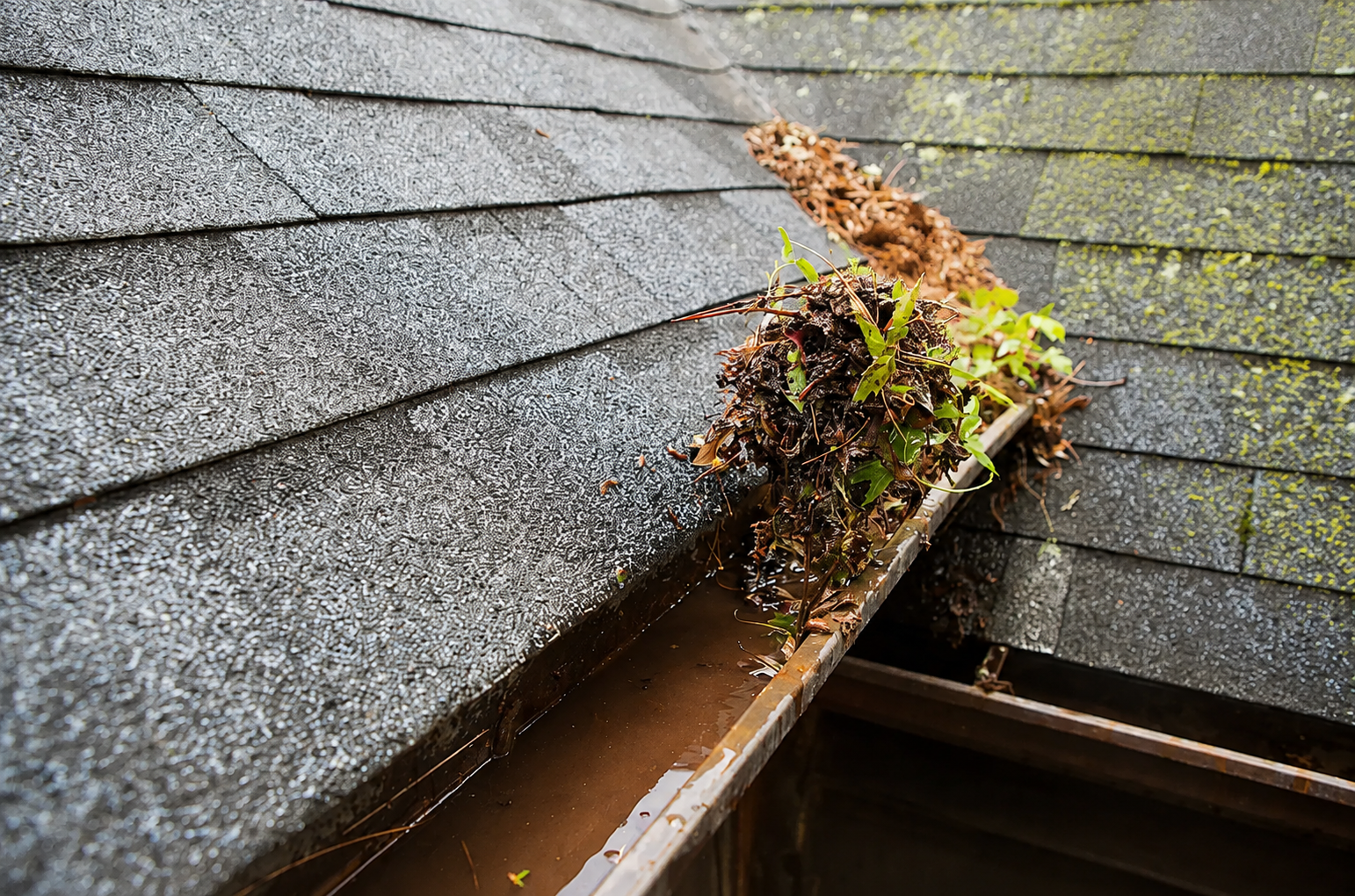
Your gutters are essential in keeping water away from your home’s foundation. After a storm, check your gutters for any debris that may have accumulated, such as leaves, branches, or shingle granules.
If you find any, clear them out to ensure your gutters work correctly. Clogged gutters can cause water to back onto your roof, leading to leaks and other problems.

Look for Water Stains
Water stains on your ceiling or walls indicate a leaky roof. If you notice any water stains, it’s essential to have your roof inspected to determine the source of the leak.
Ignoring a leak can lead to further damage to your roof and even mold growth in your home. To inspect your roof for leaks, check the attic for any signs of water damage, such as wet insulation or water stains on the walls or ceiling.
Check for Sagging or Uneven Areas
Finally, inspect your roof for any sagging or uneven areas. This could be a sign of structural damage, which can compromise the safety of your home.
To inspect your roof for structural damage, look for areas where the roof appears to be sagging or dipping. You can also check for areas where the roof appears uneven or wavy. If you notice any sagging or uneven areas, have your roof inspected by a professional as soon as possible.
Conclusion
In conclusion, inspecting your roof after a storm is a crucial step in maintaining the integrity of your home. By looking for missing or damaged shingles, dented or bent flashing, debris in your gutters, water stains, and sagging or uneven areas, you can identify potential problems and address them before they become significant issues.
If you’re unsure how to inspect your roof or spot potential damage, don’t hesitate to contact a professional roofing contractor for assistance. A professional can help you identify problems and recommend the best action to keep your roof in good condition.